 Reviews



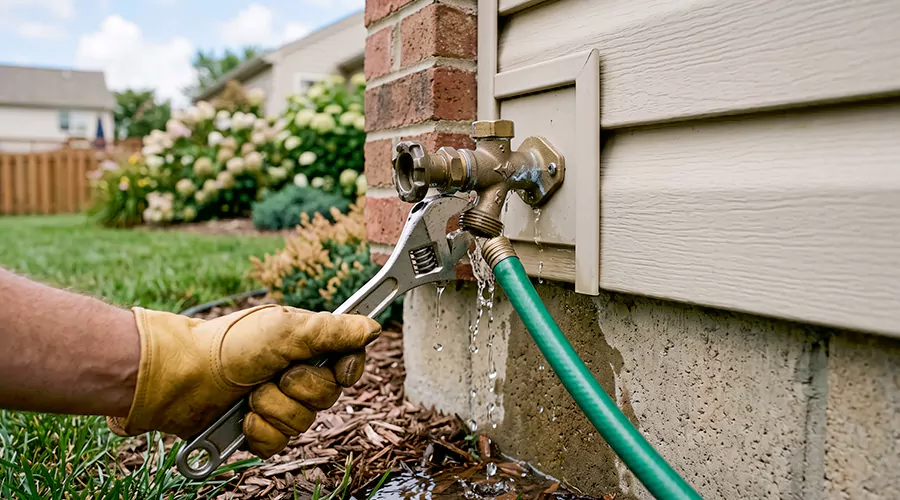
You can often fix a leaking tap by replacing its worn washer or cartridge after shutting off the water supply. The correct repair depends on the tap's internal mechanism and where the leak appears. Professional faucet repair generally costs 100–400 in the United States according to July 2026 pricing data.
Traditional compression taps use rubber washers. Many modern quarter-turn and mixer taps use ceramic cartridges. Identifying the tap design before disassembly can prevent incorrect replacement-part purchases and unnecessary repairs.
What Usually Causes a Tap to Leak?
A tap leaks when one of its internal sealing components no longer prevents water from escaping. Repeated operation gradually wears these components. Mineral deposits can also interfere with the surfaces responsible for stopping water flow.
Common causes include:
- Worn rubber washers: Traditional compression taps no longer close completely.
- Damaged ceramic cartridges: Modern taps continue passing water after shutoff.
- Deteriorated O-rings: Water escapes around the spout or another moving component.
- Damaged valve seats: Worn surfaces prevent washers from forming a complete seal.
- Loose connections: Water escapes from accessible fittings.
- Mineral buildup: Deposits interfere with internal valve movement.
- Corrosion: Internal damage affects the tap's sealing surfaces.
The repair method depends on which component has failed. Replacing a rubber washer will not repair a modern tap that uses a sealed ceramic cartridge.
How Can You Identify Your Tap Type?
Tap designs differ considerably. Some use separate hot-water and cold-water valves. Others combine both supplies in a single body. The handle mechanism can provide useful clues about the internal design.
| Tap Type | Typical Mechanism | Common Repair |
|---|---|---|
| Traditional compression tap | Rubber washer and valve seat | Replace washer |
| Quarter-turn tap | Ceramic cartridge | Replace matching cartridge |
| Single-lever mixer | Mixing cartridge | Replace cartridge |
| Swivel-spout mixer | Cartridge with separate spout seals | Identify leak location |
| Certain older designs | Manufacturer-specific components | Inspect replacement parts |
- Handle movement is a useful clue rather than definitive identification.
- For example, a two-handle tap may still use ceramic cartridges.
- Screwfix recommends identifying the installed cartridge before purchasing replacement components.
What Tools Do You Need to Repair a Leaking Tap?
Most accessible repairs require ordinary hand tools. However, some cartridge systems use manufacturer-specific retaining components.
Useful equipment includes:
- A suitable screwdriver.
- An Allen key when the handle uses a retaining screw.
- An adjustable spanner.
- Soft cloths to protect the tap finish.
- A small container for removed parts.
- The correct replacement washer or cartridge.
- Manufacturer-approved lubricant when specified.
Avoid purchasing replacement parts before identifying the tap. Two cartridges may look similar but have different dimensions or internal passages.
What Should You Do Before Starting the Repair?
Shutting off the water supply is the first step. Many taps have accessible isolation valves beneath the sink. These allow the fixture to be isolated without shutting off the entire property.
Before disassembly:
- Clear the area around the tap.
- Identify the appropriate isolation valves.
- Close both supplies when required.
- Open the tap to release remaining pressure.
- Confirm that water has stopped.
- Cover the sink drain.
- Protect the surrounding surface.
- Photograph the tap before removing components.
Do not force a damaged or seized isolation valve. Screwfix identifies water isolation as a necessary step before replacing a cartridge.
How Do You Fix a Traditional Washer Tap?
A traditional compression tap closes when a rubber washer presses against a valve seat. The washer gradually wears through repeated use. Replacing it can restore the seal when the remaining valve components are in good condition.
Follow the appropriate manufacturer's instructions. The general procedure is:
- Shut off the water supply.
- Open the tap to release pressure.
- Remove the decorative handle cap when present.
- Loosen the handle screw.
- Remove the handle.
- Access the valve assembly.
- Remove the valve stem carefully.
- Inspect the rubber washer.
- Check the valve seat for visible damage.
- Install an identical replacement washer.
- Reassemble the tap.
- Restore the water supply gradually.
A damaged valve seat can prevent a new washer from sealing correctly. Wickes recommends inspecting the washer and matching the replacement to the original component.
How Do You Fix a Tap With a Ceramic Cartridge?
Modern quarter-turn taps and many mixer taps use ceramic cartridges. The cartridge controls water movement through internal components. A worn or damaged cartridge can allow water to continue passing through the spout.
Cartridge replacement varies by manufacturer.
A general procedure includes:
- Isolate the hot-water and cold-water supplies.
- Open the tap to relieve pressure.
- Cover the sink drain.
- Remove the handle according to its design.
- Locate the retaining mechanism.
- Remove the cartridge carefully.
- Inspect the valve body for visible debris.
- Match the original cartridge to the replacement.
- Install the new component in the correct orientation.
- Reassemble the handle.
- Restore the water supply.
- Test the tap.
Screwfix estimates that a straightforward cartridge replacement can take approximately 15–30 minutes, although difficult access or seized components can extend the work.
Why Does My Tap Leak Around the Spout?
Water escaping around a swivel spout usually involves a different sealing component from the main shutoff valve. Many swivel-spout designs use O-rings that prevent water from escaping while the spout rotates. These rings can wear over time. A typical O-ring repair requires identifying the tap model and removing the spout according to its design. The old rings must be replaced with correctly sized components. Do not assume that every tap uses the same number or size of O-rings. Checkatrade identifies worn spout O-rings as a common cause of leakage around a tap's swivel connection.
How Can You Identify the Exact Leak Source?
A controlled inspection can distinguish a spout drip from water escaping around the handle or base.
Follow these steps:
- Dry the tap completely.
- Dry the surrounding sink surface.
- Turn on the tap.
- Inspect the handle area.
- Check around the spout base.
- Turn the tap off.
- Observe the outlet for several minutes.
- Inspect beneath the sink.
- Record where water first appears.
A persistent drip from the outlet often points toward the main valve. Water escaping around a swivel spout while the tap operates suggests that its seals need inspection.
What Warning Signs Suggest a Tap Needs Repair?
Small leaks can become more noticeable as internal components continue wearing.
Watch for these warning signs:
- The outlet continues dripping after shutoff.
- The handle becomes difficult to operate.
- Water appears around the handle during use.
- Moisture collects around the spout base.
- Mineral deposits form near sealing areas.
- The tap requires increasing force to close.
- A replacement washer fails to stop dripping.
- Water collects beneath the sink.
- Temperature control becomes inconsistent.
- A continuous trickle develops.
A leaking supply connection beneath the sink deserves particular attention because it can cause concealed water damage.
How Much Does It Cost to Fix a Leaking Tap?
Repair costs depend on the tap type and the failed component. Because the term "tap" is widely used in the United Kingdom, the following comparison separates UK and U.S. pricing.
| Repair | 2026 Cost Reference |
|---|---|
| Simple washer replacement | Low-cost component |
| Basic cartridge replacement | Depends on model |
| Professional tap repair in London, UK | Approximately £83–£140 |
| Average London tap repair | Approximately £107 |
| Professional faucet repair in the U.S. | 100–400 |
The UK figures reflect Checkatrade's London listings. The U.S. estimates come from Angi's July 2026 national guide. These populations should not be treated as equivalent local markets.
When Should You Call a Professional?
Professional assistance is appropriate when the tap cannot be isolated safely or the internal components cannot be removed without causing damage.
Seek assistance when:
- An isolation valve is damaged.
- The cartridge is seized.
- Internal components are severely corroded.
- The correct replacement part is unavailable.
- Water is leaking from concealed connections.
- The tap body is cracked.
- A correctly performed repair does not stop the leak.
A complete replacement may become appropriate when the tap body itself is damaged or compatible components are unavailable.
How Can You Prevent a Tap From Leaking Again?
Routine maintenance can reduce avoidable wear and make developing leaks easier to notice.
Recommended habits include:
- Avoid overtightening traditional compression handles.
- Clean accessible mineral deposits.
- Use compatible replacement components.
- Inspect swivel-spout connections.
- Check for moisture beneath the sink.
- Investigate persistent dripping promptly.
- Avoid forcing stiff handles.
Regular inspection helps identify a small leak before it causes significant water waste.
Conclusion
To fix a leaking tap, identify its internal mechanism before purchasing replacement parts. Traditional compression taps may need new washers, while modern ceramic taps often require replacement cartridges. Water escaping around a swivel spout may involve separate O-rings. Always isolate the water supply before disassembly. If the cartridge is seized or the tap body is damaged, professional repair or replacement may be necessary.
Frequently Asked Questions
Can I fix a leaking tap myself?
Many accessible washer and cartridge replacements are suitable for experienced DIY users who follow manufacturer instructions.
Why does my tap still drip after replacing the washer?
The valve seat may be damaged or the replacement washer may not match the original component.
Do mixer taps use ordinary rubber washers?
Many modern mixer taps use ceramic cartridges. Some also contain separate O-rings around their swivel spouts.
How long does a tap cartridge replacement take?
A straightforward replacement may take approximately 15–30 minutes. Difficult access can increase the time required.
Should I replace the entire tap because it leaks?
Not automatically. Many leaks involve replaceable internal components rather than damage to the tap body.